Types of Family: How Your Family Dynamics can Define your Personality


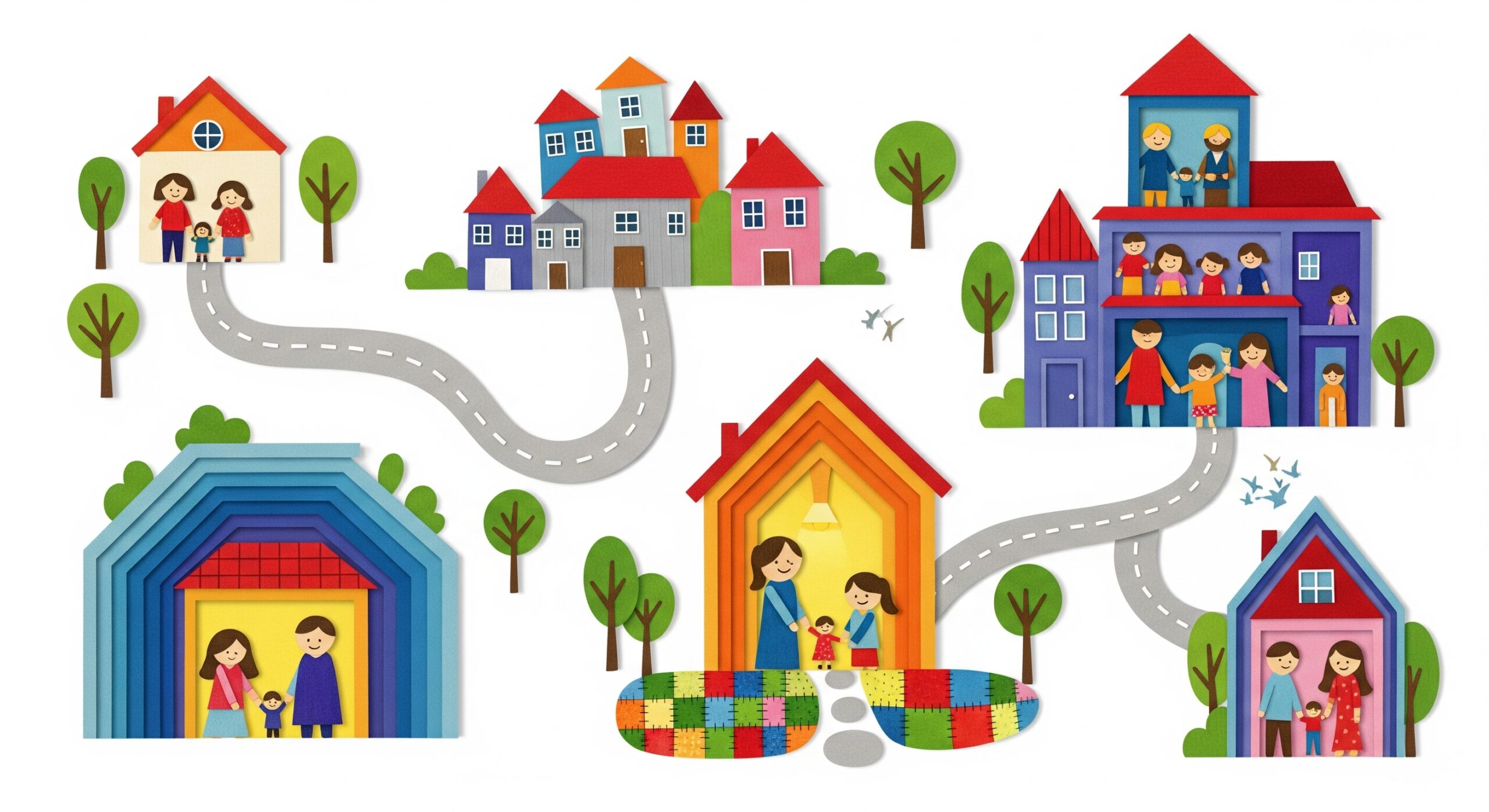
The notion that families come in one standard shape – two parents, a couple of kids, a white picket fence – has never really been true. It’s a comforting myth, honestly. The reality is messier, richer, and far more interesting.
The types of family structures that exist today are diverse, and each one leaves a distinct fingerprint on how you think, relate, and move through the world. Understanding your particular family dynamic isn’t just about catering to your curiosity. It’s actually one of the most practical tools for personal growth you’ll ever pick up.
Primary Types of Family Structures
Before diving into how families shape personality, it helps to have a clear types of family chart in your head. Here are the 3 types of family most commonly discussed, plus a few others that are equally significant.
1. Nuclear Family
The nuclear family consists of two parents and their children living under one roof. It’s the structure most television shows depict as “normal.” Resources are typically concentrated, decision-making is streamlined, and children often receive focused parental attention. But here’s the thing. That concentrated attention can cut both ways – it can nurture confidence or amplify pressure.
2. Joint Family
A joint family brings multiple generations together. Grandparents, uncles, aunts, cousins – everyone shares the same household. This is common across South Asia and other collectivist cultures. The support network is massive. So is the noise. Children grow up learning to negotiate, share, and navigate complex social hierarchies before they even reach school.
Dr Akul Gupta, consultant psychiatrist at BetterPlace, notes that children in these setups are often naturally more sociable. Why? Because the constant exposure to a high number of people and frequent visitors prepares them for social situations from day one. In this structure, every milestone is a major celebration, providing a dense social fabric for a child to grow in.
3. Extended Family
The extended family operates similarly to a joint family but with looser boundaries. Relatives live nearby rather than under the same roof. Sunday dinners, festival gatherings, emergency babysitting – the connections run deep without the daily intensity. It’s basically a support network on speed dial.
4. Single-Parent Family
One parent handles everything. The bills, the school runs, the emotional labour. Children in single-parent households often develop independence earlier. Dr Akul points out that according to child development theories, both parents play crucial roles in a child’s socio-emotional growth. The absence of one parent, whether due to death or a broken family in those early years, can significantly impact a child’s behavior and how they learn to regulate their emotions.
5. Blended Family
When parents remarry and bring children from previous relationships together, a blended family forms. Dr Akul highlights that this can create “conflicting messages.” For example, a child from a father’s previous marriage might receive a different explanation of a situation than their step-sibling. This can foster a competitive environment. If parents struggle to adapt to the new dynamic, it ripples through the household, potentially affecting the child’s future interpersonal relationships.
6. Childless Family
Two partners, no children. By choice or circumstance, childless families challenge traditional definitions. The dynamic centres entirely on the couple’s relationship. Resources flow differently. Time is allocated differently. And the personality traits nurtured here often lean toward independence, career focus, and self-reliance.
However, Dr Akul notes that external family pressure can create significant stress. Looking ahead, these families may face challenges with caretaking in old age. This can lead to “involutional depression”, a type of geriatric depression that occurs when facing the end of life or the loss of a partner, often exacerbated by loneliness.
How Family Types Shape Your Personality Development
Here’s where things get genuinely interesting. Your family structure isn’t just background scenery. It’s actively sculpting who you become.
Independence vs Interdependence Traits
Grow up in a nuclear family, and you’re likely to develop a strong sense of individual identity. Decisions get made quickly. You learn to stand on your own. Joint family upbringing? You’ll probably lean towards becoming interdependent.
While family structure matters, Dr Akul suggests that parenting style is often the bigger driver of dependence. In three-generation (joint) families, the vibe is often more permissive and protective, which can inadvertently foster dependency. Furthermore, if the biological parent isn’t the “head” of the joint family, it can create confusing power dynamics for the child.
Communication Patterns and Social Skills
The most frustrating part of understanding communication styles is realising how much was baked in before you even had a choice. In larger family structures, you learn to read rooms, pick up on unspoken tensions, and navigate multiple opinions simultaneously. Nuclear families often foster more direct communication – fewer people, fewer filters. Single-parent families frequently produce excellent listeners. When there’s only one adult to talk to, children learn to pay attention.
If you want to understand how communication and comfort develop inside close bonds, this guide on intimacy explains it in a way that applies to family relationships too, not just romantic ones.
Decision-Making Abilities
Joint families make decisions by consensus. It takes forever sometimes. But the upside? You learn patience and negotiation. Nuclear families often model faster, more autonomous decision-making. Blended families? They’re basically advanced courses in diplomacy. You learn that there’s rarely one right answer, just the answer that keeps the most people reasonably content.
Emotional Regulation and Support Systems
Think about it this way. Having a bad day in a joint family means someone will notice, probably within minutes. In nuclear or single-parent structures, emotional resources are concentrated. You might develop deeper one-on-one bonds, but with fewer people. Neither approach is superior. But each creates different emotional reflexes. Some people learn to seek support broadly. Others learn to process internally first.
If your support system feels thin and worry starts becoming your default coping style, it can help to read about anxiety and what it looks like when stress crosses the line into something more persistent.
Cultural Values and Identity Formation
Extended families are particularly powerful transmitters of cultural values. Stories get passed down. Traditions stick. In nuclear families, cultural transmission is more selective – parents consciously choose what to pass on. Blended families often produce children with broader cultural fluency. They’ve been exposed to multiple traditions from the start.
In a joint family, however, Dr Akul warns of “benchmark setting.” With more cousins and relatives around, there is more pressure to compare and compete, which can be particularly intense for younger children. If that comparison pattern sticks with you into adulthood, this piece on inferiority complex breaks it down clearly.
Recognising Your Family Dynamic’s Impact on Your Behaviour
Self-awareness is the whole point of this exercise. Once you recognise patterns, you can work with them – or consciously change them.
Signs of Nuclear Family Influence
Do you prefer making decisions independently? Feel uncomfortable with too much group input? Value privacy strongly? These might be nuclear family markers. You probably also have clear boundaries – knowing where your identity ends and others begin. The flip side? Sometimes you might struggle with collaborative environments or feel isolated when you actually need support.
Joint Family Personality Markers
If you naturally consider how your choices affect others, struggle to make decisions without consulting people, and feel genuinely energised by large gatherings – that’s joint family programming. You’re likely excellent at reading social dynamics. But you might also find it difficult to prioritise your own needs or feel guilty about individual ambitions.
Adapting to Changing Family Structures
Families aren’t static. Divorce happens. Grandparents move in. Kids leave home. A nuclear family becomes a single-parent family becomes a blended family. Each transition rewires things a bit. The key isn’t resisting change. It’s recognising that each structure brings different strengths and challenges. You don’t have to be defined by one version of your family.
Breaking Negative Family Patterns
Every family type has its shadow. Nuclear families can be pressure cookers; joint families can suffocate individuality. Breaking these patterns starts with the identification of patterns. It takes years to model different behaviours, but as Dr Akul suggests, understanding the “operating system” you were raised with is the first step toward upgrading it.
If you want structured support to work through family patterns in a practical way, CBT therapy can help you challenge automatic beliefs and build healthier responses in real life.
Understanding Your Family Type for Personal Growth
Understanding your family structure provides a map of your psychological terrain. It explains your triggers, your relationship styles, and why certain environments feel like home while others feel stifling.
Personal growth isn’t about escaping this influence; it is about understanding it well enough to make conscious choices. Your upbringing provided a set of tools. Some remain brilliant, while others require an upgrade. Your family history is a significant chapter of your story, but it does not have to be the end of it.
If you want to explore this with a professional, you can speak with counselling psychologists in Delhi or book a session with a psychologist in Gurgaon.
FAQ's about Types of Family
Absolutely. A nuclear family might become a single-parent family after divorce, then a blended family upon remarriage. Children might move back in with ageing parents, creating an extended family structure. Families are fluid. The psychological imprints from each phase layer on top of each other.
The main difference is living arrangements. A joint family shares one household – multiple generations under the same roof, pooling resources and responsibilities. An extended family maintains close connections but lives in separate homes. Daily interaction versus regular contact. Both provide strong support networks, but the intensity differs significantly.
Definitely. If your family structure changed during childhood, you’ll carry traits from each phase. Even within one structure, individual relationships matter. You might have nuclear family independence but joint family social skills because your grandparents were heavily involved. Personalities are layered, not monolithic.


Anuroop Pokhriyal is a Content Specialist at BetterPlace Health. Before joining BetterPlace, he worked as a psychologist, content writer and marketer. He draws on his background in psychology to simplify complex mental health concepts and make them more accessible to readers. When he is not writing and optimising content, he enjoys playing badminton and making music.
Related Blogs