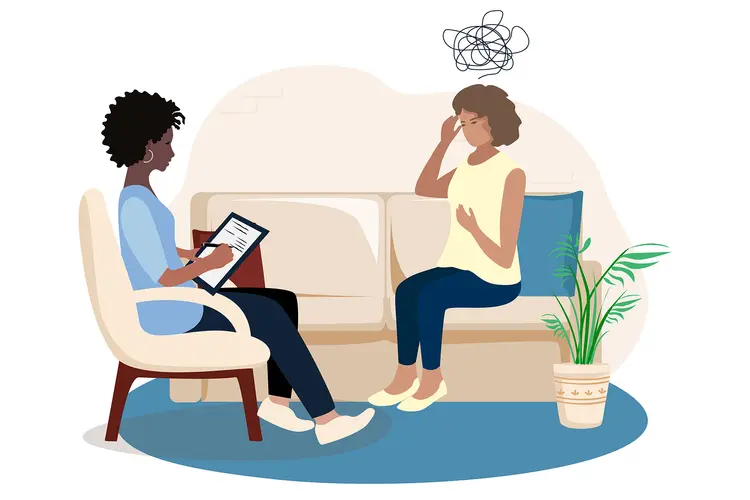


Just like any romantic or friendly relationship, the relationship between you and your therapist needs trust and understanding to be successful.
Imagine you have just moved into a new house with your partner. You both discuss how you want your house to look, which colour you both want the walls to be, which curtains to buy, and where to install the TV. You both successfully communicate to complete a shared goal.
Similarly, you and your therapist work with each other to make a positive change in your mental health.
Trust and Empathy: The Building Blocks of Therapy
You must trust the therapeutic process, just as your therapist must trust that you are capable of changing and achieving your goals. Empathy is of utmost importance. This alliance is also built on the mutual agreement of your treatment goals and tasks. You are more than welcome to come up with agendas that you want to put forward for discussion.
The Role of Rapport in Therapy
The first few sessions in therapy primarily focus on building a strong rapport between you and your therapist. Without this rapport, your therapist may struggle to discuss the treatment goals, assign tasks, or explore your inner conflicts. This is where your trust in the process comes into play. A good rapport entails that you can bring up issues without fearing what your therapist will think about you. Your opinions and perspectives matter.
The Role of Communication
Therapy is a two-way process. This means that it is important for both you and your therapist to be in sync. If you ever wonder how much you should talk in a session, there is no strict rule. Therapy is a shared space where both you and your therapist contribute to the conversation. Both you and your therapist actively explore challenges in your life. Some sessions are dedicated to ventilation or catharsis, while some are dedicated towards active problem-solving.
Setting and Refining Goals Together
Identifying goals is an important part of the therapist-client alliance. Your therapist helps determine whether a goal is unfocused (too broad or impractical), unrealistic (difficult to achieve or sustain), or uncoordinated (misaligned with your personality).
Now that we have covered some of the basic tenets of a therapist-client alliance, let’s discuss how this alliance helps in the therapeutic process.
- A strong therapist-client alliance enhances the therapy process by creating a space for you where they can unapologetically be yourself.
- The more openly you share your innermost feelings and maladaptive behaviours, the more effective your therapy sessions become.
- It also helps your therapist to understand you better so they can draw the best therapeutic approach that you can apply in your day-to-day life.
- A strong therapist-client alliance leads to better therapeutic outcomes and improves long-term progress.
- The strength of the therapeutic alliance determines how well you respond to it. It increases your chances of making a positive change in your life by applying the tools that you discuss in the sessions.
- This alliance is reflected in your overall satisfaction with therapy, and a satisfied client often means a fulfilled therapist.
Conclusion
At its heart, therapy is about connection. A strong alliance with your therapist creates a space where you can be vulnerable without fear, where your goals are taken seriously, and where you can grow.
So, if you’re in therapy (or considering it), remember this: you are in therapy for yourself. Don’t wait. Seek help, be open to collaboration, and trust that the alliance you build with your therapist is powerful enough to create real change. After all, therapy isn’t something done to you—it’s something you do together.


Anuroop Pokhriyal is a Content Specialist at BetterPlace Health. Before becoming one of BetterPlace’s first team members, he worked as a psychologist, content writer and marketer. He draws on his background in psychology to simplify complex mental health concepts and make them more accessible to readers. When he is not writing and optimising content, he enjoys playing badminton and making music.
Related Blogs