
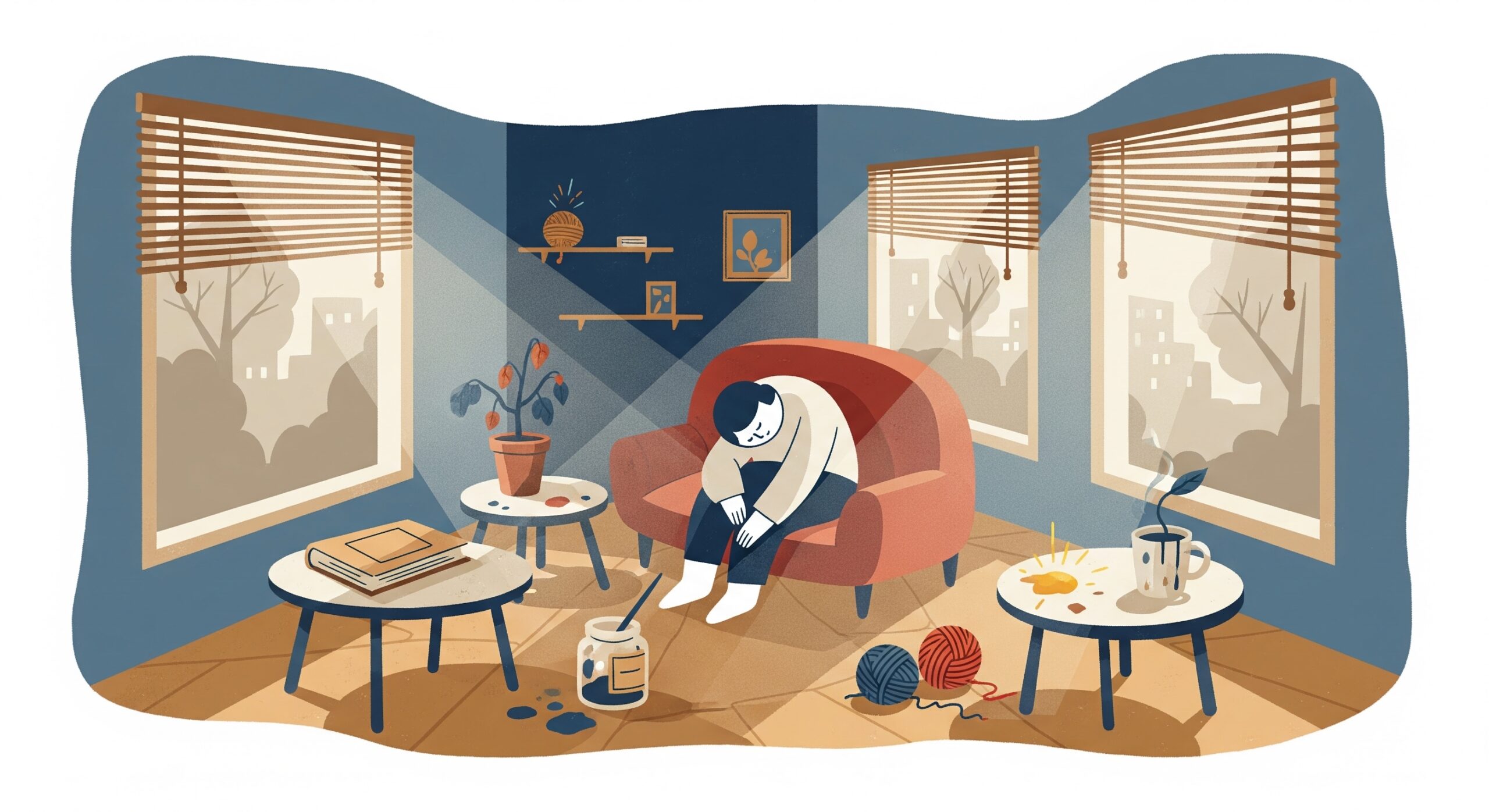
How to Regain Purpose When You’re Losing Interest in Everything


Losing interest in things you love does not happen all at once. It usually creeps in quietly until you realise that nothing feels fun anymore.
You might stop looking forward to your favourite hobbies or spending time with friends. Even the simplest tasks start to feel heavy and exhausting. You might tell yourself that you are just tired or stressed out from work. However, deep down, you know that something has changed. If you feel this way, please know that you are not lazy and you are not broken. You are going through a very real emotional experience that many others face too.
What Actually Happens When You Lose Interest in Everything
Ms Sulagna Mondal, Clinical Psychologist at BetterPlace, notes that depression can be overwhelming, which often manifests as a profound loss of interest in everything. When you lose interest in life, your brain’s reward system essentially goes on strike. Doctors call this anhedonia. It happens because your dopamine receptors become less sensitive. Dopamine is the chemical in your brain responsible for motivation and pleasure. When these receptors do not work well, they need much stronger signals just to feel a basic sense of satisfaction. It feels like needing five cups of coffee just to get the energy that one cup used to give you.
How Depression Rewires Your Brain
This is more than just feeling sad for a few days. Your brain literally processes your experiences in a different way. Activities that used to bring you joy now feel like chores. Ms Mondal observes that this often leads to a constant lethargic feeling throughout the day, where people may find themselves lying down in bed all day or engaging in doomscrolling. Even thinking about what to do when you lose interest in everything can feel completely overwhelming. The hardest part is that you remember enjoying these things in the past.
Signs You are Losing Interest in Everything
The signs of this shift are often very subtle at first. You might not notice them until they have already taken over your daily routine. Ms Mondal highlights that many people struggle with trouble expressing emotions and often do not even recognise their own sadness. Here is what you should watch for if you feel like you are not interested in anything:
- Browsing without choosing: You spend a long time looking through Netflix or YouTube, but never pick anything. Ms Mondal suggests this looks like binging a series but failing to follow through after only one or two episodes.
- Autopilot conversations: You tell people you are fine without even thinking about it, even when you are talking to someone you trust.
- Unfinished projects: You have half-read books, unused craft supplies, or a gym membership that you never use. Ms Mondal identifies this as a form of avoiding hobbies and finding excuses not to do things.
- Blurred days: Your days start to blend together because nothing exciting or memorable happens to mark the time.
- Physical heaviness: Every movement feels like a huge effort. Even showering or replying to a text message feels like a major task.
- Persistent low mood: Feeling “off” or empty becomes your normal state instead of a rare occurrence.
- Sleep and eating changes: You might sleep too much or too little. Ms Mondal points out that some people sleep in the daytime specifically to avoid responsibilities like work or studies.
- Avoiding plans: You start skipping events because you cannot predict if you will have enough energy. This often leads to social isolation, where you stop meeting friends or simply stand isolated in social settings.
- Severe Procrastination: Ms Mondal notes that putting things off becomes a primary hurdle when you are losing interest in everything.
If these feelings last for more than two weeks, you might want to look into seeking depression treatment in Delhi from a professional. Structured mental health therapy can help you stabilise your emotions.
Practical Steps to Overcome Loss of Interest
You cannot force yourself to feel joy again. Trying to do that is like trying to push a heavy rope. Instead, you should focus on creating the right environment so that your interest can slowly return on its own.
Start with Small Daily Wins
Tiny victories are very important when life feels heavy. Ms Mondal explains that because big tasks can be overwhelming, dividing a single large task into smaller, multiple tasks helps you move things forward. This allows you to feel accomplished and move on to the next step.
She recommends a technique called “graded task assignment,” where you start with the easiest possible task and gradually move toward bigger ones. If you find yourself thinking, “I have no interest in anything, what should I do?” Ms Mondal suggests starting small. For example, if calling a friend feels overwhelming, you can start by just texting them. Next, you might try simply pressing the number on your keypad. Then, aim to talk for just two minutes. Later, if you feel confident enough, you can have a full conversation.
Break the Cycle of Isolation
Isolation gets stronger the longer you stay away from others. Even a tiny act of reaching out makes a difference. Ms Mondal notes that people often find excuses not to do things, which feeds the cycle of avoiding socialising events. Following the graded task assignment approach, you do not need to attend a full social gathering immediately. You could send one short text or go sit in a quiet cafe for a little while. Adding a tiny bit of structure to your week gives you a chance for human contact without too much pressure.
If you want help rebuilding routines and social confidence without feeling pushed, starting with counselling can make the process feel a lot more doable.
Reset Your Dopamine Baseline
Some habits can drain your ability to feel real interest. If you spend too much time on high-stimulation activities like social media, your brain gets tired. Ms Mondal points out that habits like doomscrolling are common when you are struggling to feel motivated. Taking planned breaks from these habits gives your brain space to reset. You might feel bored at first, but that boredom is a sign that your reward system is healing. Over time, you will learn how to find interest in life through slower and simpler experiences.
Create Non-Negotiable Routines
When you lack motivation, a routine acts as your safety net. Ms Mondal observes that many people lie in bed all day or sleep during the hours they should be at work to avoid the weight of their responsibilities. Having fixed times to wake up, eat, and rest provides stability against this lethargy. These anchors support you on your worst days and keep your life from falling into total chaos. Routines do not fix everything immediately, but they hold you steady while you work on deeper healing. Some people also use modern treatments like rTMS to help jumpstart the motivation circuits in their brain.
Other Treatment Methods
If you feel like you need structured support (not just self-help) to get moving again, mental health therapy in Delhi can help you build routines, reduce avoidance, and slowly rebuild motivation in a way that fits your life.
Some people also explore modern options like rTMS/TMS to help jumpstart stuck motivation circuits, especially when symptoms have been persistent, and other approaches haven’t been enough.
Moving Forward
You will not wake up one day with all of your old motivation back at once. Interest usually returns in small pieces. Ms Mondal emphasises that because depression can be overwhelming, you must remember that small tasks are what help you move things forward. What matters is that you keep giving yourself chances to reconnect with the world in small ways.
You might start with five minutes of sunlight or a single message to a person you trust. By using graded task assignments—moving from a text to a two-minute call—each small step tells your brain that you are still here and you are still trying. You deserve patience and a gentle pace as you find your way back to yourself. You are allowed to move slowly. Even slowly losing interest in everything can be reversed with time; slow progress is still real progress.
Frequently Asked Questions
Why am I losing interest in everything so suddenly?
If you are asking, “why i am losing interest in everything?” the answer often points to burnout, high stress, or depression. Your brain might be trying to save energy after a long period of pressure. Ms Mondal notes this can manifest as a constant lethargic feeling and trouble expressing emotions, leading you to procrastinate or avoid your usual hobbies. It can also be caused by physical issues like thyroid problems or a lack of certain vitamins.
Is losing interest a sign of depression?
Anhedonia is a major sign of depression. Ms Mondal explains that depression is often overwhelming and can lead to specific behaviours like sleeping in the daytime to avoid responsibilities, doomscrolling, and social isolation. If you find yourself lying in bed all day or not feeling motivated about anything for more than two weeks, talk to a professional.
Can I lose interest in my relationships too?
Yes, this happens often. When your relationships feel empty, try to stay in “maintenance mode.” Ms Mondal suggests applying the graded task assignment here: if a full social event is too much, start by texting a friend or talking for just two minutes. Be honest with your partner or friends about what you are going through. Just being physically present matters a lot even if you cannot engage emotionally right now. Avoid making big life decisions until you feel more like yourself.


Anuroop Pokhriyal is a Content Specialist at BetterPlace Health. Before becoming one of BetterPlace’s first team members, he worked as a psychologist, content writer and marketer. He draws on his background in psychology to simplify complex mental health concepts and make them more accessible to readers. When he is not writing and optimising content, he enjoys playing badminton and making music.
Related Blogs