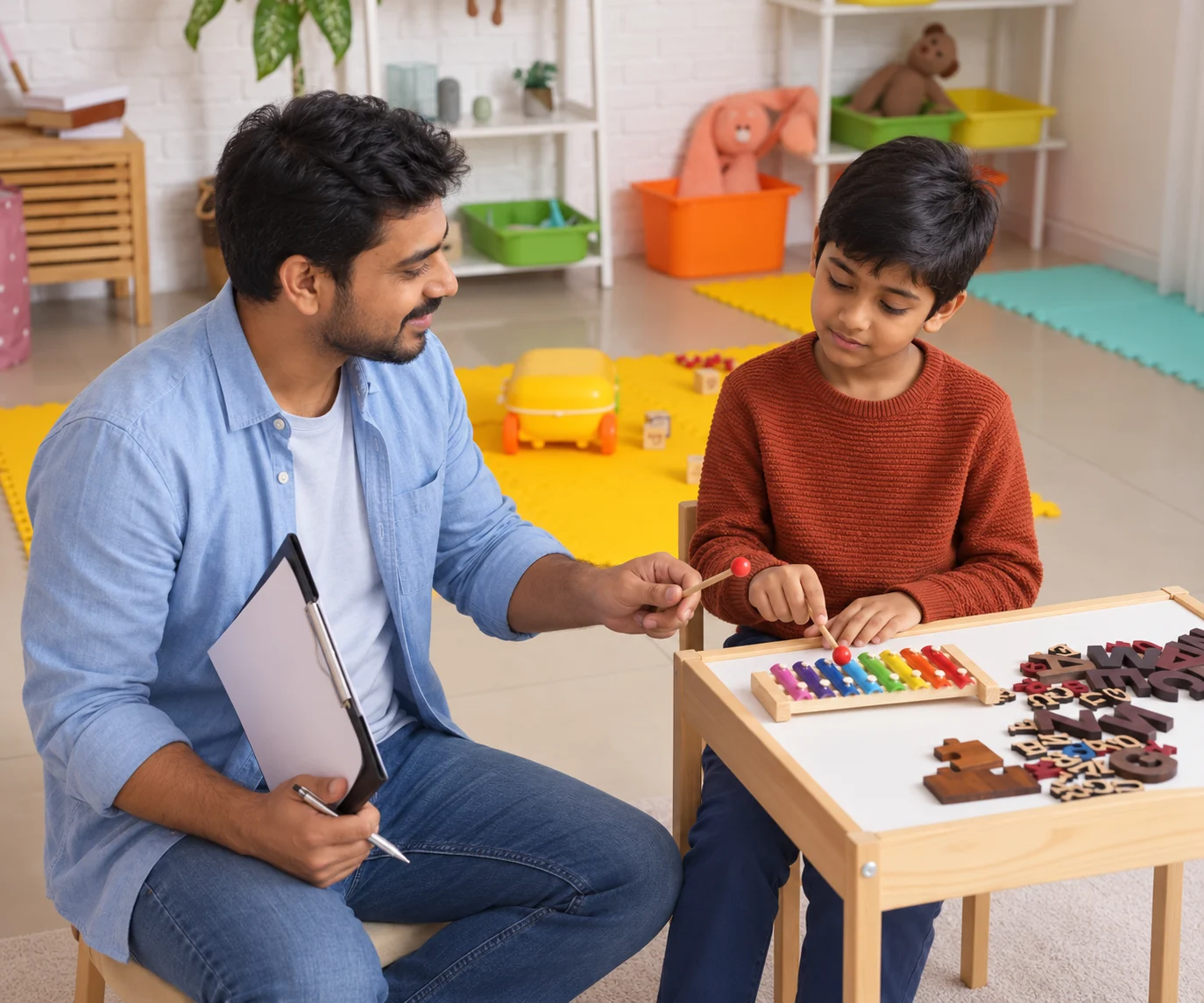
Psychological Services Backed by Research, Trusted by Thousands

50K
+
Lives transformed
97%
Report early reduction in symptoms
40
+
Years of trusted, effective care

Our Approach to Personalised Psychological Care for Children

Child-friendly assessments

Our psychologists use age-appropriate assessment tools that help uncover emotional, behavioural or neurodevelopmental concerns in children without overwhelming them.

Integrated care for conditions

If your child has ADHD, autism, or learning difficulties, our psychologists collaborate with psychologists, therapists, and paediatricians to create a well-rounded care plan

Parent-inclusive treatment planning

You're never left out of the loop. We work closely with parents and caregivers to ensure that you understand the diagnosis, treatment options, and how to support your child at home.

Long-term developmental tracking

Your child’s emotional and psychological growth doesn’t stop after one consultation. We offer long-term follow-ups to track progress across stages of development.

Visiting BetterPlace? Here’s What to Expect

When visiting BetterPlace, you can expect a welcoming environment where there is 0% judgement.

Detailed initial session (90 min)

Meet with both a psychologist and a psychiatrist

Comprehensive testing

Get an accurate understanding of your mental health

Treatment phase (3-8 Weeks)

Get a personalised treatment plan

Long-term support

Get ongoing care with regular follow-ups

Meet The Best Child Psychologists in Delhi With 40+ Years of Clinical Experience

Dr. Pranita Gaur

Clinical Psychologist

Online, In-person

Hindi, English

44+ Years Experience

Ms. Anantika Tehlani

Clinical Psychologist

Online, In-person

Hindi, English

7+ Years Experience

Ms. Ayushi Paul

Clinical Psychologist

Online, In-person

Hindi, English, Bengali

5+ Years Experience

Ms. Ridhi Batra

Clinical Psychologist

Online, In-person

Hindi, English

2+ Years Experience

Ms. Sukanksha Sahni

Clinical Psychologist

Online, In-person

Hindi, English

5+ Years Experience

Ms. Sulagna Mondal

Clinical Psychologist

Online, In-person

Hindi, English, Bengali

3+ Years Experience

Ms. Shreya Maheshwary

Counselling Psychologist

Online, In-person

Hindi, English

2+ Years Experience

Ms. Shreeyam Mishra

Clinical Psychologist

Online, In-person

Hindi, English

2+ Years Experience

Ms. Mitali Srivastava

Senior Clinical Psychologist

Online, in-person

Hindi, English

15+ Years Experience

Meet Our Child Psychologists for Effective Treatment Today!

Visit us or book an online consultation

BetterPlace, East of Kailash

At National Heart Institute

First Floor, Annexe Building
D Block, East of Kailash, New Delhi

BetterPlace, Gurgaon

5th Floor, Plot No 33,

Golf Course Road,
Sector 54, Suncity,
Gurgaon 122011

Transformation Stories at BetterPlace

My daughter was diagnosed with depression at just 13, and we tried a bunch of different doctors before finally finding the right one. Now she’s 20 and doing really well. She’s super comfortable with Dr. Akul and her therapist, and I’m happy because I get regular updates and can track her progress in real-time.

R
Rishab M

When my son was diagnosed with autism, I was lost on how to help him. The specialists at BetterPlace have been amazing, offering guidance and therapy that really fits his needs. He’s more confident now, and we see a lot of progress.

S
Sagarika V

My daughter was having trouble keeping her anger control, she lost all her friends because of this. Thanks to Dr. Akul, she can now manage her emotions well. We’re seeing a lot of difference in how she handles situations.

M
Meera T

BetterPlace: Find the Best Child Psychologist in Delhi

What is Child Psychology?

Child psychology focuses on understanding how children think, feel, behave, learn and develop as they grow. A child psychologist in Delhi works with children and adolescents who may be experiencing emotional, behavioural, developmental, social or academic difficulties.

Unlike psychiatrists, psychologists do not prescribe medication. They use psychological assessments, therapy, behavioural interventions and parent guidance to understand what may be affecting a child and help them develop healthier ways of coping.

Read More

Children may not always be able to explain what they are feeling in words. A child psychologist uses age-appropriate conversations, activities, observations and structured assessments to understand the child’s concerns and create a suitable treatment plan.

If you are looking for a child psychologist in Delhi, BetterPlace provides specialised child psychology services as part of an integrated mental healthcare system where psychologists and psychiatrists can work together whenever required.

Common Mental Health and Behavioural Concerns in Children

Children can experience emotional and behavioural difficulties at different stages of development. Some concerns may resolve with support, while others may benefit from professional assessment and intervention.

A child psychologist in Delhi can help assess and manage a range of emotional, behavioural and developmental concerns, including:

Anxiety

Children can experience excessive worry about school, friendships, separation from parents, social situations, health or everyday activities. Anxiety may appear as frequent reassurance-seeking, avoidance, irritability, physical complaints or difficulty sleeping.

Behavioural Difficulties

Frequent tantrums, aggression, defiance, impulsive behaviour or difficulty following rules may sometimes indicate that a child needs additional emotional or behavioural support. A psychologist can help identify what is driving the behaviour and teach both the child and parents strategies to manage it.

Attention and Concentration Difficulties

Children who struggle to concentrate, complete tasks, remain seated or control impulsive behaviour may require assessment for conditions such as ADHD. A child psychologist can evaluate these concerns and recommend appropriate interventions.

Autism and Social Communication Difficulties

Some children may experience challenges with communication, social interaction, flexibility, sensory processing or repetitive behaviours. Psychological and developmental assessments can help identify whether these difficulties relate to Autism Spectrum Disorder or another developmental concern.

Learning Difficulties

Children may struggle with reading, writing, mathematics, memory, comprehension or other academic skills despite receiving appropriate teaching. Psychological assessments can help identify learning disorders such as dyslexia, dysgraphia and dyscalculia and guide suitable academic support.

Low Mood and Emotional Difficulties

Children and teenagers can also experience sadness, low self-esteem, withdrawal, irritability, loss of interest and difficulty coping with stressful situations. Therapy can help children understand their emotions and develop healthier coping strategies.

School and Peer Difficulties

Bullying, friendship problems, academic pressure, school refusal and difficulties adjusting to a new school can significantly affect a child’s emotional wellbeing. A child psychologist in Delhi can help children build confidence, improve coping skills and manage these challenges.

Read Less

Importance of Early Intervention

Recognising When Your Child May Need Support

Children often communicate distress through changes in behaviour rather than directly telling adults that something is wrong.

Parents may notice changes such as:

  • Frequent anger or emotional outbursts
  • Increased anxiety or fear
  • Difficulty concentrating
  • Falling academic performance
  • Social withdrawal
Read More
  • Changes in sleep or appetite
  • School refusal
  • Repeated physical complaints without a clear medical explanation
  • Loss of interest in activities
  • Sudden changes in behaviour
  • Difficulties making or maintaining friendships

An isolated behaviour does not necessarily indicate a mental health condition. However, if the difficulty continues, becomes more intense or begins affecting your child’s everyday life, consulting a child psychologist in Delhi can help you understand what may be happening.

Why Does Early Psychological Support Matter?

Children constantly learn new ways of thinking, behaving and responding to their environment. This makes childhood an important time to identify difficulties and teach healthier coping skills.

When you seek support early, you can help your child understand their emotions, communicate better, develop confidence and prevent certain patterns from becoming harder to change later.

Early support can prove particularly helpful for anxiety, ADHD, autism, learning difficulties, behavioural concerns and social or emotional difficulties.

The goal is not to label your child. It is to understand what they need and give them the right support as early as possible.

Early intervention can prove particularly valuable for developmental concerns, learning difficulties, anxiety, behavioural problems and social challenges. When parents, psychologists and schools work together, children can receive more consistent support across different areas of their lives.

Read Less

Child Psychology Services at BetterPlace in Delhi

At BetterPlace, East of Kailash, New Delhi, we do not look at your child’s symptoms in isolation. We try to understand the complete picture.

When you consult a child psychologist in Delhi at BetterPlace, we look at your child’s emotional health, behaviour, development, school functioning, family environment and any other factors that may affect their wellbeing.

You also do not need to decide whether your child needs a psychologist, clinical psychologist or psychiatrist before you come to us. Our team can help you determine the right course of care.

Read More

Individual Therapy for Children and Adolescents

Therapy for children does not necessarily look like therapy for adults.

Depending on your child’s age, personality and concerns, sessions may involve conversation, activities, exercises or other age-appropriate therapeutic techniques.

Your child’s psychologist may work with them on anxiety, low mood, confidence, emotional regulation, anger, social difficulties, behavioural concerns or adjustment to difficult experiences.

The aim is to help your child understand what they feel and give them practical skills to deal with those feelings.

Behavioural Interventions

If your child struggles with aggression, tantrums, impulsivity, routines, emotional outbursts or following instructions, we can help you understand the patterns behind these behaviours.

Instead of simply telling your child what not to do, behavioural interventions focus on understanding triggers and teaching healthier responses.

You will often play an important role in this process because changes at home can reinforce what your child learns during sessions.

Parent Guidance and Counselling

Sometimes, your child is not the only person who needs support.

You may find yourself wondering whether you should be stricter, more patient, more involved or give your child more space. Conflicting advice from relatives, teachers and the internet can make things even more confusing.

Our psychologists can help you understand your child’s behaviour and give you practical strategies for responding to it.

Depending on your child’s needs, we may guide you on communication, boundaries, routines, reinforcement, emotional regulation and handling difficult behaviour at home.

School and Academic Support

Your child’s emotional health and school life often affect each other.

If your child has ADHD, anxiety, a learning difficulty or another concern that affects school, we can help you understand what support they may need academically.

Where appropriate, recommendations may include changes to study routines, classroom strategies, behavioural support or accommodations based on your child’s assessment.

Read Less

How to Choose the Right Child Psychologist

Finding the right psychologist matters because your child needs to feel comfortable enough to trust and engage with them.

Here are some things you should consider when looking for a child psychologist in Delhi.

Check Their Qualifications

Start by checking the psychologist’s education, professional training and area of practice.

If your child requires formal psychological testing or diagnosis of certain clinical conditions, you may specifically need a clinical psychologist with the appropriate qualifications and professional registration.

Read More

Look for Experience with Children

Working with children is very different from working with adults.

The psychologist should understand child development, family dynamics, school environments and the ways in which children communicate emotional difficulties.

Ideally, you should choose someone who regularly works with children around your child’s age.

Consider Their Expertise

You should also consider why you are seeking help.

For example, a child experiencing anxiety may have different needs from a child undergoing an ADHD or learning disability assessment.

Choosing a child psychologist in Delhi who has experience with your child’s particular concern can help you get more targeted support.

Pay Attention to Your Child’s Comfort

Qualifications matter, but so does your child’s comfort with the psychologist.

Your child should gradually feel safe enough to speak, interact and participate in sessions without feeling judged or intimidated.

You should also feel comfortable asking the psychologist questions and discussing your concerns openly.

Ask How Parents Will Be Involved

You should know what role you will play in your child’s treatment.

With younger children, psychologists may involve you quite closely. With teenagers, they may need to maintain more privacy while still keeping you involved in important aspects of care.

Ask the psychologist how they plan to communicate with you, how they will track progress and what you can do at home to support your child.

Check Reviews and Recommendations

You can ask your paediatrician, school counsellor or other trusted professionals for recommendations.

You can also look at credible online reviews to understand other families’ experiences with a child psychologist in Delhi, particularly their communication style, professionalism and approach to working with children.

Read Less

Treatment Approaches in Child Psychology

There is no single type of therapy that works for every child.

Your psychologist will choose an approach based on your child’s age, difficulties, personality and treatment goals.

Cognitive Behavioural Therapy

Cognitive Behavioural Therapy, or CBT, helps your child understand how their thoughts, emotions and behaviour influence one another.

For example, an anxious child may learn to recognise worrying thoughts, understand how those thoughts affect their body and behaviour, and gradually develop healthier ways of responding.

With children, psychologists usually make CBT more engaging through practical exercises, examples and age-appropriate activities.

Read More

Behaviour Therapy

Behaviour therapy focuses on the patterns surrounding a behaviour. If your child frequently has tantrums, becomes aggressive or refuses to follow routines, the psychologist may look at what happens before and after the behaviour to understand what keeps it going.

You may then learn specific strategies to encourage positive behaviour and respond more consistently to difficult behaviour.

Play-Based Interventions

Young children do not always express themselves through words. They may communicate through play, drawings, stories or activities instead.

A psychologist can use these interactions to understand your child’s emotions and help them explore difficult experiences in a way that feels natural and age-appropriate.

Emotional Regulation and Social Skills

Some children find it difficult to identify their emotions, manage frustration, read social cues or interact comfortably with other children.

Therapy can help your child practise skills such as recognising emotions, calming themselves, communicating clearly, solving problems and navigating social situations.

Parent Management Training

If your child’s behaviour has become difficult to manage at home, working with you may form an important part of treatment.

You can learn how to set clearer boundaries, reinforce positive behaviour, create predictable routines and respond to difficult behaviour without unintentionally strengthening it.

Family-Based Support

Sometimes, family interactions can affect the way a child feels or behaves.

Where appropriate, your psychologist may involve you or other family members to improve communication, reduce conflict and create a more supportive environment for your child.


Supporting Your Child’s Mental Health

What happens outside therapy matters too. Small changes in how you communicate with your child and respond to their emotions can make a meaningful difference.

Give Your Child Space to Talk

Try to listen before immediately offering a solution.
Your child may sometimes need you to understand how they feel rather than tell them what they should do.

When your child knows they can talk to you without being criticised or dismissed, they are more likely to come to you when something is wrong.

Create Predictable Routines
Regular sleep, meals, school routines, physical activity and family time can give your child a greater sense of stability. Predictability can prove especially helpful if your child experiences anxiety, behavioural difficulties or developmental concerns.

Balance Connection with Boundaries
Your child needs warmth and reassurance, but they also need clear boundaries. You can acknowledge your child’s emotions without accepting every behaviour. For example, you can understand that your child feels angry while still making it clear that hitting or shouting is not acceptable.

Stay Connected with Your Child’s School
Your child’s teachers may notice things that you do not see at home. Speak to teachers or school counsellors if you notice changes in your child’s academic performance, friendships or behaviour.

When home, school and mental health professionals work together, your child receives more consistent support.

Ask for Help Before You Reach a Crisis
You do not need to wait until your child reaches a crisis before seeking help. If you have persistent concerns, a consultation with a child psychologist in Delhi can help you understand whether your child needs therapy, an assessment, changes at home or simply some additional support.

Read Less

Cost of Consulting a Child Psychologist in Delhi

The cost of consulting a child psychologist in Delhi can vary depending on the psychologist’s qualifications and experience, the duration of the session and the type of support your child needs.

For example, an assessment for ADHD, autism, a learning disorder or intellectual functioning may involve several steps, including parent interviews, clinical observation, standardised testing, scoring and preparation of a report.

At BetterPlace, we first understand what your child needs so that we can guide you towards the appropriate service rather than asking you to book an assessment or therapy without knowing whether it is necessary.


Read More

You can speak to our team for the current consultation fees and assessment costs before you book your appointment.

Appointment Type Details Cost (Starts at)
First Session (90 mins) With an in-house clinical psychologist + psychiatrist at BetterPlace Clinic ₹2,000
Psychiatric Consultation In-person or online consultation with a psychiatrist ₹1,500
Psychological Consultation/Session 50-minute in-person or online therapy sessions ₹2,500
Follow-up Consultation with a Psychiatrist A 20-minute session to discuss your progress ₹1,500
Medication (if prescribed) As per the condition and treatment plan Extra (varies)

We may also administer psychometric tests to gain a deeper understanding of your condition (separate charges applicable).

*Prices are subject to change

Read Less

How to Book an Appointment with a Child Psychologist in Delhi

To book an appointment with our mental health doctors in Delhi, you can head over to any webpage on our website, click the “Book an appointment” or “Start your journey” button, input your details, and our representative will get back to you shortly.

Alternatively, you can call us at  +919773996888 and book an appointment with our front desk directly.

FAQs About Child Psychologists in Delhi

You do not need to make this decision on your own. Psychologists and psychiatrists both work with children experiencing mental health concerns, but they play different roles.

A psychologist usually focuses on therapy, behavioural interventions and psychological assessments, while a psychiatrist is a medical doctor who can diagnose mental health conditions and prescribe medication when necessary.

At BetterPlace, you can meet both professionals when needed. If you are unsure whether to book a psychiatrist or a child psychologist in Delhi, our team can help you choose the right starting point based on your child’s concerns.

There is no fixed number of sessions because every child responds to every treatment differently.

Some children may need support for a few weeks or months, while others may benefit from longer-term therapy. The duration depends on your child’s concerns, treatment goals, age, progress and how consistently they can apply what they learn outside sessions.

Your child psychologist in Delhi will regularly review your child’s progress and discuss whether you should continue, reduce or conclude therapy.

This depends on your child’s age and the reason you are seeking help.

For younger children, the psychologist may involve you more closely in the sessions. Older children and teenagers may spend part or most of the session alone with the psychologist so they can speak comfortably.

A child psychologist in Delhi may also schedule separate conversations with you to understand what you have noticed at home without making your child feel that every detail of their therapy gets reported back to you.

The first appointment usually focuses on understanding your concerns and your child’s background.

The psychologist may ask you about your child’s development, family environment, school life, relationships, routines, medical history and any recent changes you have noticed.

Depending on your child’s age, the psychologist may also spend time speaking with or observing your child.

You do not need to prepare your child with a detailed explanation beforehand. Simply tell them that they are meeting someone who helps children when things feel difficult or confusing.

Yes. In many cases, speaking privately with the psychologist can help you discuss concerns that you may not want to raise in front of your child.

A child psychologist in Delhi may recommend a separate parent session before or during treatment, particularly when they need more detailed information about your child’s development, behaviour or family circumstances.

The psychologist will decide how to structure these conversations based on your child’s age and treatment needs.

Your and your child’s privacy is our responsibility. However, the psychologist may share relevant guidance with you when it helps your child’s treatment. They may also need to act if they believe your child or someone else faces a serious risk of harm.

With teenagers in particular, your child psychologist in Delhi should explain clearly to both you and your child what will remain confidential and when they may need to involve a parent.

This is not unusual, particularly during the first few sessions.

Your child may feel shy, suspicious, embarrassed or simply unsure why they are there. A psychologist will not expect every child to begin talking openly immediately.

Instead, they may spend time building trust through conversation, activities or other age-appropriate interactions.

loader
Scroll to Top
Call Us Book Appointment