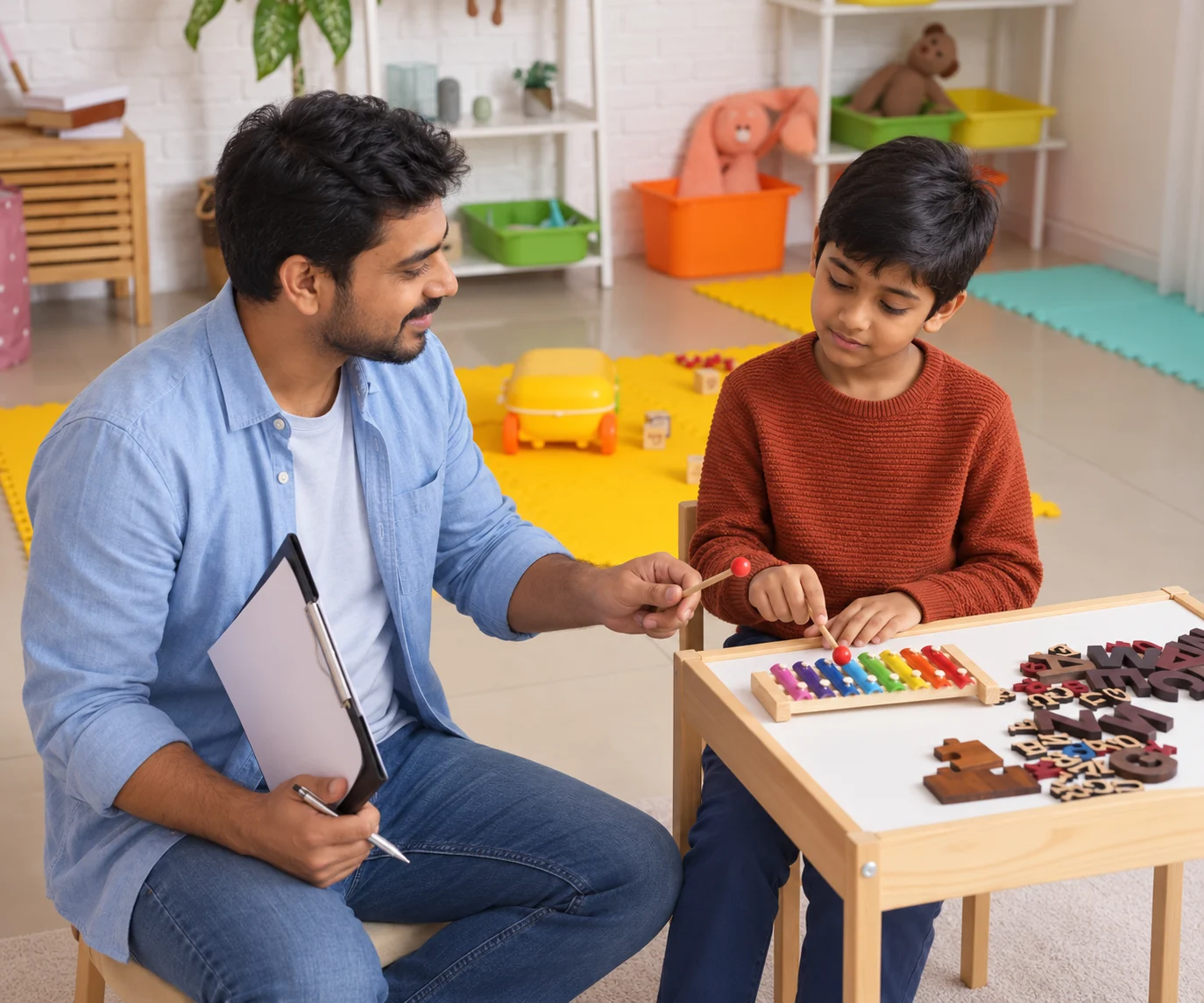
Behaviour Therapy
Behaviour therapy focuses on the patterns surrounding a behaviour. If your child frequently has tantrums, becomes aggressive or refuses to follow routines, the psychologist may look at what happens before and after the behaviour to understand what keeps it going.
You may then learn specific strategies to encourage positive behaviour and respond more consistently to difficult behaviour.
Play-Based Interventions
Young children do not always express themselves through words. They may communicate through play, drawings, stories or activities instead.
A psychologist can use these interactions to understand your child’s emotions and help them explore difficult experiences in a way that feels natural and age-appropriate.
Emotional Regulation and Social Skills
Some children find it difficult to identify their emotions, manage frustration, read social cues or interact comfortably with other children.
Therapy can help your child practise skills such as recognising emotions, calming themselves, communicating clearly, solving problems and navigating social situations.
Parent Management Training
If your child’s behaviour has become difficult to manage at home, working with you may form an important part of treatment.
You can learn how to set clearer boundaries, reinforce positive behaviour, create predictable routines and respond to difficult behaviour without unintentionally strengthening it.
Family-Based Support
Sometimes, family interactions can affect the way a child feels or behaves.
Where appropriate, your psychologist may involve you or other family members to improve communication, reduce conflict and create a more supportive environment for your child.
Supporting Your Child’s Mental Health
What happens outside therapy matters too. Small changes in how you communicate with your child and respond to their emotions can make a meaningful difference.
Give Your Child Space to Talk
Try to listen before immediately offering a solution.
Your child may sometimes need you to understand how they feel rather than tell them what they should do.
When your child knows they can talk to you without being criticised or dismissed, they are more likely to come to you when something is wrong.
Create Predictable Routines
Regular sleep, meals, school routines, physical activity and family time can give your child a greater sense of stability. Predictability can prove especially helpful if your child experiences anxiety, behavioural difficulties or developmental concerns.
Balance Connection with Boundaries
Your child needs warmth and reassurance, but they also need clear boundaries. You can acknowledge your child’s emotions without accepting every behaviour. For example, you can understand that your child feels angry while still making it clear that hitting or shouting is not acceptable.
Stay Connected with Your Child’s School
Your child’s teachers may notice things that you do not see at home. Speak to teachers or school counsellors if you notice changes in your child’s academic performance, friendships or behaviour.
When home, school and mental health professionals work together, your child receives more consistent support.
Ask for Help Before You Reach a Crisis
You do not need to wait until your child reaches a crisis before seeking help. If you have persistent concerns, a consultation with a child psychologist in Delhi can help you understand whether your child needs therapy, an assessment, changes at home or simply some additional support.