How to Sleep 8 Hours in Just 3: Sleep Hacks That Actually Work


It sounds like the ultimate productivity hack: getting a full night’s rest in the time it takes to watch a movie.
If you are reading this, you are probably tired of choosing between your to-do list and your pillow. The idea of trying to reduce sleep hours by compressing eight hours into three or maybe four is incredibly tempting. But is it actually possible, or just a recipe for burnout?
The answer is more interesting than a simple “no.” While you cannot cheat your biology forever, most of us are sleeping inefficiently, spending hours in light, restless states that don’t actually recharge us. The secret isn’t just cutting hours; it is about “sleep density.” In this guide, we explore how to stop wasting time in bed and maximise the restorative power of every single minute you do get.
Can You Really Get 8 Hours of Sleep in 3 or 4 Hours?
The short answer? No. Not really. Ms Sulagna Mondal, clinical psychologist at BetterPlace, is quick to debunk this as a myth. Your brain isn’t a smartphone you can “fast charge.” To function, adults generally need 4 to 6 complete sleep cycles to allow for proper repair.
Expert’s Insights:
Ms Sulagna links the brain’s recovery to healing a fractured bone. Just as a break takes months of rest to knit back together, your brain requires consistent time to recover and process metabolism. When you chronically slash those hours, you aren’t just tired; you’re inviting cognitive decline, headaches, and cardiovascular issues. Most importantly, you lose out on memory consolidation—the process where your brain moves information from short-term to long-term storage.
The Myth About “Super Sleeprs”
Now you might ask “But what about those super sleepers who seem fine on just four hours of sleep?” Ms Sulagna notes that while some people can condition themselves over the years to function on less, even they would benefit from more rest. You might be able to survive, but you won’t be thriving.
If you’re experiencing this kind of sleep loss alongside constant worry, restlessness, or panic symptoms, it can overlap with patterns seen in anxiety, and it’s also worth understanding the broader context of sleep disorders and treatment.
Top Sleep Hacks to Maximise Rest in Minimal Time
Polyphasic Sleep Patterns: Uberman and Everyman Schedules
The Uberman schedule sounds almost masochistic, six 20-minute naps every four hours. The Everyman approach is gentler: one core sleep of 3-4 hours plus several naps. Both aim to train your brain to enter REM faster. Most people crash within two weeks, so if you’re going to experiment, prepare for a “fever dream” adaptation period.
If you find yourself constantly trying out different sleep tips because you are always exhausted, it really helps to understand the science behind it. When you are in “sleep debt,” your body and mind are not just tired—they are actually struggling to function. Learning exactly how sleepless nights disrupt your internal systems can help you see why consistent rest is so important.
Sleep Compression Technique for Gradual Adaptation
This method works backwards from traditional advice. Instead of going to bed earlier, you restrict your time in bed to match your actual sleep time. Sleeping only six hours but spending eight in bed? Cut it to six. Your body learns to consolidate sleep into denser, more efficient blocks.
If you find yourself constantly cutting back on sleep just to finish your work, you might be stuck in a “sleep debt” spiral. It is a tough cycle to break because the less you sleep, the harder it is to focus the next day. Working with a psychologist in Delhi can help you step back and look at your routine. Together, you can build sustainable habits that protect your rest and stop that feeling of always being behind.
Optimising Deep Sleep Through Temperature Control
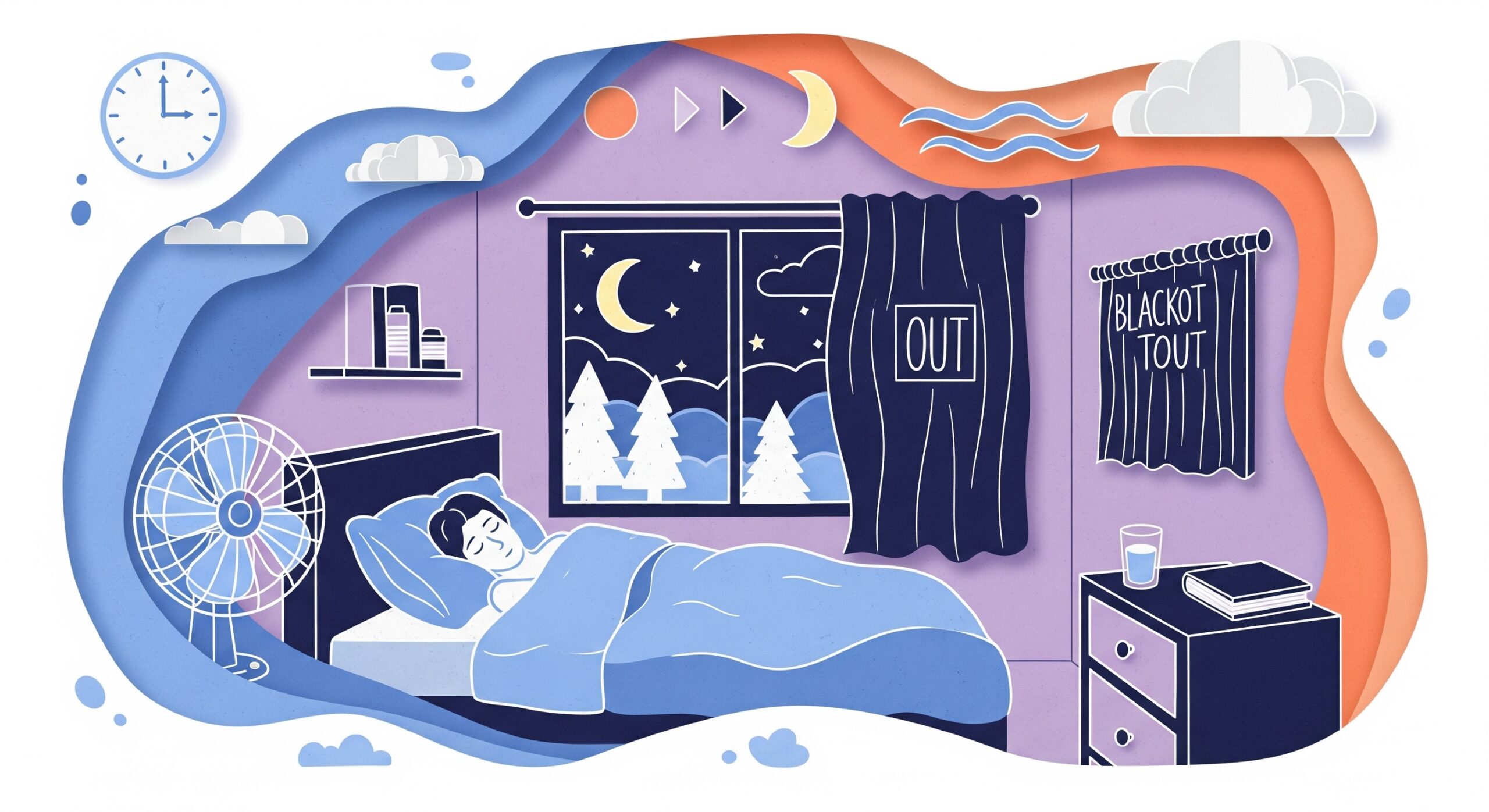
Your core body temperature needs to drop roughly 1-2 degrees Celsius to initiate deep sleep. Ms. Sulagna recommends keeping your environment relatively cool while ensuring your body feels warm and cosy. A warm shower before bed can actually help because the subsequent cooling of your skin triggers drowsiness.
Struggling to sleep through the night?
Treating sleep issues on your own can feel impossible when you don’t know what's really causing them. We offer comprehensive sleep tests (polysomnography), accurate diagnosis, and end-to-end treatment, all under one roof.
Talk to a Sleep Expert
Strategic Power Napping for Energy Restoration
The perfect nap lasts exactly 20 minutes. Any longer and you risk sleep inertia – that groggy, disoriented feeling. Any shorter and you barely scratch the surface. Timing matters enormously. The post-lunch dip (around 1-3pm) aligns naturally with our circadian rhythms. Napping then won’t wreck your sleep at night, but napping at 6 pm absolutely will.
Pre-Sleep Breathing Exercises: 4-7-8 Method
Inhale for four seconds, hold for seven and exhale for eight. Repeat. The technique activates your parasympathetic nervous system – essentially forcing your body out of fight-or-flight mode.
If your brain just won’t shut off at night, it’s usually because your “arousal” level is too high. You can use quick tricks, like micro-interventions for anxiety, to dial that energy back down. These small techniques help calm your racing thoughts almost immediately. Once you lower that mental noise, your body can finally relax enough to let you drift off to sleep.
Science-Based Methods to Enhance Sleep Quality
Creating the Perfect Sleep Environment
Ms. Sulagna emphasises that your environment is the biggest factor for deep sleep. To get it right, focus on these three pillars:
- Light and Sound: Use blackout curtains for low light and soundproof your space. If silence is too quiet, Ms Sulagna suggests white noise or nature sounds like rain or flowing water to mask distractions.
- Visual Comfort: Switch to warm-colored lights in the evening to signal to your brain that the day is ending.
- The Foundation: Use a comfortable mattress, not too hard, not too soft.
Sometimes you can fix everything in your bedroom, and your brain still refuses to turn off. If mental noise is keeping your sleep light and restless, talking to a counsellor can really help. They give you the tools to shut down those racing thoughts so you can finally get the deep, restorative rest you need.
Light Management and Circadian Rhythm Optimisation
Bright light exposure within 30 minutes of waking sets your circadian clock. Blue light from screens after sunset scrambles it. If you want to know how to improve sleep quality without supplements or gadgets, this is where to start. Don’t even bother with expensive sleep trackers until you’ve mastered light hygiene.
If your sleep is disrupted for weeks despite good sleep hygiene, it may be time to explore sleep disorder treatment in Delhi rather than continuing to “push through” exhaustion and trying different self-care tips.
Dietary Adjustments for Deeper Sleep
What you eat is just as important as when you eat. Ms Sulagna warns against going to bed either starving or stuffed. If your stomach is too empty, it’ll keep you awake; too full, and digestion interferes with rest.
For a natural “sleep inducer,” look for foods high in tryptophan, like dairy, turkey, or tuna. If you need a snack, have a light, carbohydrate-rich option at least 90 minutes before bed, and steer clear of oily foods. As for the “overrated” list? Ms Sulagna puts green tea and caffeine there; both act as stimulants that hang around your system much longer than you’d like.
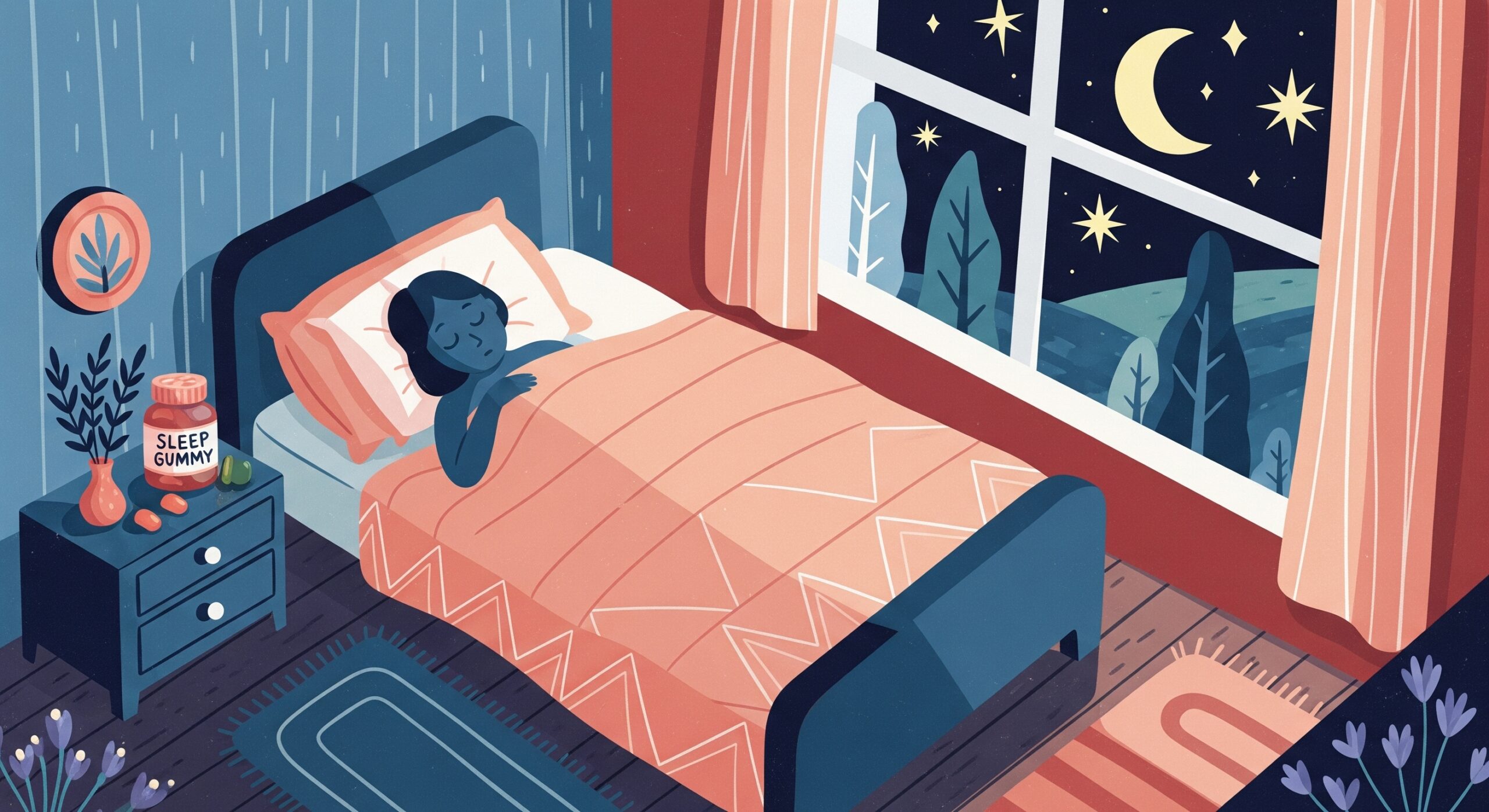
If you’re considering quick fixes like gummies or pills, it helps to know the basics on what’s worth it and what isn’t—see: sleep gummies: benefits and risks and the safest sleeping pill in India.
Stress Reduction Techniques Before Bedtime
If your brain doesn’t have an off switch, you have to build one. Ms Sulagna recommends “box breathing” to shift your focus from racing thoughts to your breath. For physical tension, she suggests Jacobson Muscle Relaxation (JCPMR) or guided imagery to mentally transport you out of your stress and into a restful state.
Conclusion: The Reality of Sleep Optimisation
Can you learn how to sleep less and have more energy? Within limits, yes. Can you literally compress eight hours of sleep into three or four hours? No. The human brain doesn’t work that way. What you can do is make every hour of sleep count through temperature, timing, environment, and habits.
FAQ's of How to Sleep 8 Hours
Chronic sleep deprivation increases risks of heart disease, weakened immunity, cognitive decline, and mental health issues, especially when people try to reduce sleep hours without proper recovery. Short-term effects include impaired judgement and reaction time.
While some over-the-counter options exist, Ms Sulagna clarifies that there is no “magic” supplement that replaces good sleep hygiene. Environmental changes always beat pills in the long run.
Power naps supplement night sleep but cannot fully replace it. They’re useful for energy restoration but don’t provide the deep sleep cycles your body needs for complete recovery.


Anuroop Pokhriyal is a Content Specialist at BetterPlace Health. Before becoming one of BetterPlace’s first team members, he worked as a psychologist, content writer and marketer. He draws on his background in psychology to simplify complex mental health concepts and make them more accessible to readers. When he is not writing and optimising content, he enjoys playing badminton and making music.
Related Blogs