5 Proven Natural Ways to Reduce Anxiety Immediately


Dealing with anxiety can feel overwhelming, but it does not have to control your entire day. When you feel a wave of panic or worry coming on, you need tools that work right away.
While long-term care is important, having a “first-aid kit” for your mind can help you stay steady in the middle of a busy schedule. By focusing on your body and your surroundings, you can signal to your brain that you are safe. These simple actions take only a few minutes, but they can completely change how you feel. Learning these quick tricks gives you the confidence to handle stress whenever it shows up.
What is Anxiety?
Anxiety is a state where your brain becomes extra alert to potential threats, affecting your thoughts, your body, and your behaviour. Ms Lovleena Sharma, Clinical Psychologist at BetterPlace, says that anxiety is a natural biological response rather than a sign of weakness. While it may be sending hyperactive signals, your mind is essentially just trying to keep you safe. Anxiety only becomes a problem when these signals become too frequent or intense.
Expert’s Insights:
Because of the gut-brain axis, these signals often manifest in the body before the mind even registers the feeling of worry. Ms Sharma notes that people often misinterpret anxiety as a physical illness, frequently consulting specialists for gas, acidity, or IBS symptoms. When medical reports come back normal, the psychological roots become clearer. Understanding this connection is one of the best ways to reduce anxiety, as it helps you realise that your racing heart or tight muscles are part of a manageable survival reflex rather than a mysterious ailment.
If you want a quick comparison that helps you label what’s happening in the moment, panic attack vs anxiety attack can clear up a lot of confusion.
Quick Checklist to Reduce Stress and Anxiety
- Breathe: Use a two-minute breathing drill to regulate your nervous system.
- Ground: Use imagery or sensory focus to stop racing thoughts.
- Nourish: Opt for anxiety-reducing foods like spinach and almonds to boost magnesium.
- Soothe: Use a warm cup of tea as a physical cue for your body to relax.
If you want ultra-fast options you can do discreetly anywhere, these micro-interventions for anxiety fit perfectly as a “first-aid kit” addition.
5 Proven Natural Ways to Reduce Anxiety Immediately
1. Deep Breathing Exercises
Taking slow breaths into your belly is one of the fastest ways to calm your nervous system. Ms Sharma recommends diaphragmatic breathing because it helps regulate the nervous system and slows down those intrusive, racing thoughts. You can try a simple box pattern for two minutes: inhale, hold, exhale, and hold, each for a count of four. Making your exhale slightly longer than your inhale can further increase your “vagal tone,” signalling your body to rest.
2. Progressive Muscle Relaxation
This technique involves tensing and then releasing different muscle groups, starting at your feet and working up to your face. Ms Sharma explains that this process reduces physical stress and effectively grounds the body. By squeezing each muscle group for a few seconds and then letting go completely, you nudge your system out of “fight or flight” mode and into a state of rest.
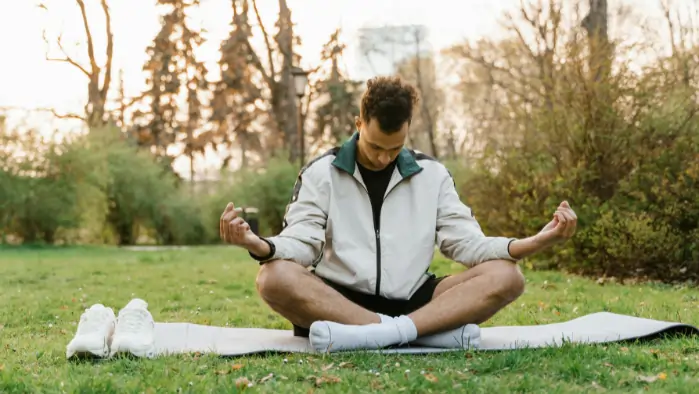
3. Quick Mindfulness Techniques
Training your attention helps quiet the mental noise. Ms Sharma suggests that mindfulness works by pulling cognitive energy away from anxious thoughts and anchoring it in the present. Her recommended anger management tips (which apply equally to anxiety) include:
- A five-minute body scan.
- Focusing on a single sense (like a specific sound).
- Using a temperature shift, such as a cold or warm sensation on your skin.
- Paced breathing to return your attention to your natural rhythm.
When anxiety turns into a nonstop mental loop, it’s easy to feel ‘stuck’ even after your body finally chills out. Having a few practical strategies to stop-overthinking in your back pocket can help you clear that mental fog and actually move on with your day.
4. Physical Movement and Exercise
Short bursts of activity quickly shift your mood and body chemistry. Movement helps burn off excess adrenaline and resets the nervous system. Whether it is a seven-minute walk or 20 squats, exercise releases endorphins that help you reduce anxiety naturally.
5. Grounding and Guided Imagery
Grounding techniques like the 5-4-3-2-1 method pull your attention away from fear and toward something neutral. To further reduce anxiety immediately, you can pair this with guided imagery. Ms Sharma points out that music is a powerful tool here; relaxation sounds like rain, falling water, or ocean waves help the brain de-stress and move away from intrusive thoughts. This offers a sensory anchor that slows down physiological arousal.
If these tools work but your anxiety keeps returning every day, it can help to work on the underlying trigger pattern in counselling with a psychologist in Delhi instead of only using “emergency fixes.”
Anxiety Reducing Foods: Eating for a Calmer Mind
What you eat directly influences your neurotransmitters and blood sugar stability. To reduce anxiety and stress through your diet, Ms Sharma suggests focusing on nutrient-rich foods that stabilise your mood:
- Magnesium-Rich Foods: Almonds, spinach, and whole grains help your brain follow relaxation pathways.
- Omega-3 Fatty Acids: Fatty fish or high-quality supplements regulate brain inflammation.
- Antioxidants and Gut Health: Berries and fermented foods support the gut-brain axis.
- Dark Chocolate: Aim for 70% cocoa and above to help lower stress levels.
- Hydration and Timing: Drinking adequate water and eating timely, stable portions prevents blood sugar crashes.
Foods to Avoid
It is wise to limit fruit juices, as sugar spikes can cause crashes that mimic panic. Ms Sharma also advises being cautious with alcohol, caffeine, and processed foods, as these can overstimulate or destabilise the nervous system, making symptoms feel much worse.
Conclusion: Take Control of Your Anxiety Today
Anxiety is a natural mechanism. Your body may overreact at times, but Ms Sharma reminds us that it is not dangerous. You do not need to fight or invalidate these feelings; you simply need tools to manage them. By thinking rationally during anxious moments and using your mental “first-aid kit,” navigating stress becomes significantly easier.
If you’re looking for structured care locally, anxiety treatment in Delhi can help you combine therapy, coping strategies, and medical support when needed.
FAQ's of Natural Ways to Reduce Anxiety Immediately
Ms Sharma notes that breathing exercises usually work within 5 to 10 minutes, while grounding can provide almost immediate relief. CBT-based approaches take longer but provide the most significant long-term change.
To see the best results, Ms Sharma suggests practising at least 3 to 4 times a day for 10 to 15 minutes. Regular sessions in the morning and before bed help your body learn how to return to safety instinctively during a crisis.
Stress usually feels manageable and tied to a specific cause. Ms Sharma explains that anxiety becomes a disorder when it is overwhelming, creates constant thought preoccupation, and makes small tasks difficult. If your daily functioning is impaired, it is time to seek professional care.


Anuroop Pokhriyal is a Content Specialist at BetterPlace Health. Before becoming one of BetterPlace’s first team members, he worked as a psychologist, content writer and marketer. He draws on his background in psychology to simplify complex mental health concepts and make them more accessible to readers. When he is not writing and optimising content, he enjoys playing badminton and making music.
Related Blogs