
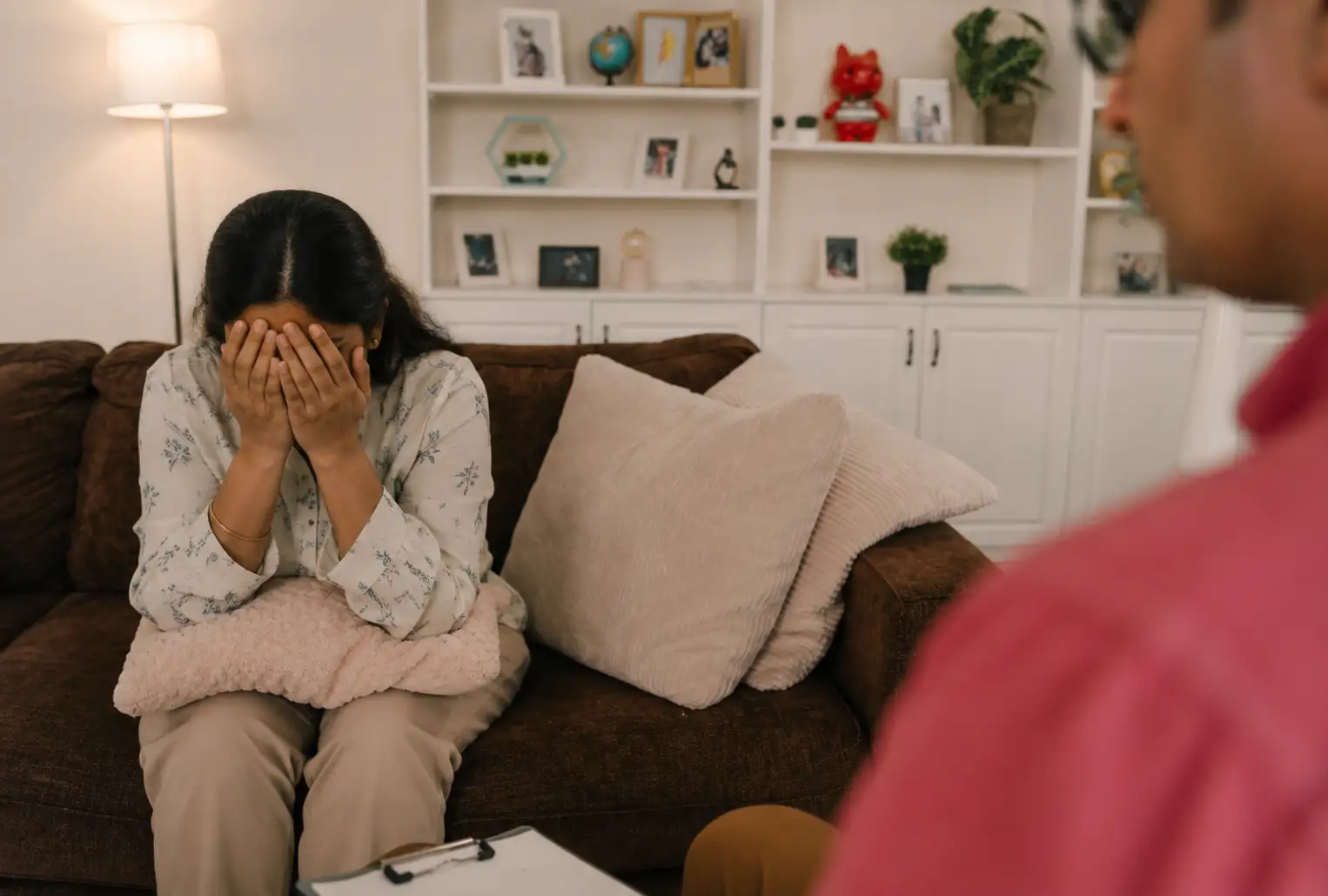
“I faced a lot on the battlefield but never thought the real battle would begin once I got home. The nightmares, panic attacks and flashbacks ambushed me when I least expected it. Full credit goes to the excellent doctors at Better Place for helping me tackle my demons head-on. It’s been a slow and steady process but the results have been very encouraging so far.”
Psychiatric Services Backed by Research, Trusted by Thousands
50K
+
Lives transformed
97
%
Report early reduction in symptoms
40
+
Years of trusted, effective care

Brain Stimulation Treatments
Consult our Experts with over 40 years of Combined Experience

Dr. Sunil Mittal
Senior Consultant Psychiatrist


Online, in-person
Hindi, English
40+ Years Experience

Dr. Shambhavi Jaiman
Consultant Psychiatrist
Online, In-person
English, Hindi
7+ Years Experience

Dr. Siddharth Sethi
Consultant Psychiatrist
Online, In-person
English, Hindi, Marathi
7+ Years Experience

Dr. Akul Gupta
Consultant Psychiatrist
Online, in-person
Hindi, English
5+ Years Experience
Transformation Stories at BetterPlace

“My father was getting triggered at any time. It was hard to tell what would set him off. It was really putting a strain on the relationship of the entire family as we would walk on egg shells around him. After therapy at betterplace, we found out that he had underdone childhood trauma that triggered his episodes. Therapy has helped him feel much better and manage his symptoms.”
“For years, I feared going to bed due to relentless nightmares that woke me after just a few hours. I visited a few somnologists who told me everything in my body was working well there was nothing wrong. With the help of BetterPlace, i found out that i have unresolved past trauma I experienced. Therapy helped me confront my PTSD and develop coping techniques to reclaim my nights. Sleep is finally peaceful again.”
Meet Our Experts for Effective Treatment Today!
Visit us or book an online consultation

BetterPlace, East of Kailash
At National Heart InstituteFirst Floor, Annexe Building D Block, East of Kailash, New Delhi
BetterPlace, Gurgaon
5th Floor, Plot No 33,
I’ve seen how much the field has evolved, but the core remains the same: you deserve a team that makes you feel heard and gives you the best.
Dr Sunil Mittal
Chief of Clinical Governance, BetterPlace
MD, Psychiatry | 40+ Years of experience














BetterPlace: Free PTSD Test

What is a PTSD severity assessment?
Most online tests give you a yes or no answer. A PTSD severity assessment goes further. Instead of just asking if you might have PTSD, it tells you how intense your symptoms are, which is the question that actually shapes what happens next.
This matters because severity changes everything about your recovery path. Mild symptoms may respond well to self-care and short-term support. Severe symptoms usually call for evidence-based therapy and faster professional involvement. Without a sense of where you sit on that scale, it is hard to know how seriously to take what you are feeling, or how much help to ask for.
Read MoreThe free PTSD test online below is a severity assessment, not just a screener. It is designed to give you a clear category, not just a verdict.

Who should take this PTSD test?
This PTSD assessment is for you if any of the following apply:
- You have lived through a traumatic event such as an accident, assault, bereavement, medical trauma, natural disaster, or combat exposure
- You are experiencing flashbacks or nightmares weeks or months after the event
- You find yourself avoiding reminders of what happened, including people, places, or conversations
- You feel on edge, jumpy, or emotionally numb since a difficult experience
- You are a loved one trying to understand what someone close is going through
- You are already in therapy and want to track changes in your PTSD severity over time
This test for PTSD is intended for adults and is not a diagnostic instrument.

How does the 9-question PTSD assessment work?
The free PTSD test online uses 9 short questions about how often you have experienced common trauma symptoms recently. Each answer is rated on a frequency scale, and your responses are grouped into a severity category at the end.
The questions are drawn from a DSM-5 validated PTSD severity tool used by mental health professionals in clinical practice, which means the structure of this test for PTSD reflects the same symptom areas a psychiatrist would ask about during a consultation. The test takes under two minutes and your result appears on screen straight away.
If you have not yet taken the test, scroll back up to begin.

Understanding your PTSD severity result
Once you complete the PTSD assessment, your result will fall into one of four severity categories. Each one points to a different next step.
Read More- Mild: Symptoms show up occasionally and are not significantly disrupting your daily life. Self-care, healthy routines, and trauma-informed support may be enough at this stage. Re-take the PTSD test in a few weeks if your situation changes or symptoms intensify.
- Moderate: Symptoms are showing up regularly and starting to affect your sleep, mood, work, or relationships. A consultation with a mental health professional is a sensible next step before things escalate.
- Severe: Symptoms are interfering meaningfully with everyday functioning. Evidence-based PTSD treatment such as trauma-focused CBT or EMDR is recommended, and the sooner you begin, the better the outlook tends to be.
- Extreme: Symptoms are intense, frequent, and likely making daily life very difficult to manage. Reach out for professional support soon. Effective treatment for PTSD exists and recovery is realistic, even at this level of severity.

What the assessment actually measures
The free PTSD test online covers the four symptom clusters defined in the DSM-5 for post-traumatic stress disorder. Understanding these helps you make sense of your result.
- Intrusion symptoms: unwanted memories, flashbacks, nightmares, or strong emotional reactions when something reminds you of the event
- Avoidance: steering clear of reminders, including people, places, conversations, or activities linked to the trauma
- Negative changes in mood and thinking: numbness, persistent guilt or blame, detachment from people you care about, and a flat or hopeless outlook
- Hyperarousal: jumpiness, sleep difficulties, irritability, hypervigilance, and being easily startled
The PTSD severity assessment looks at how often these show up and how much they are interfering with your life.

Book a PTSD assessment at BetterPlace Health
If your free PTSD test online result suggests you would benefit from professional support, a clinical PTSD assessment is the next step. At BetterPlace Health, you can book a session with a psychiatrist or psychologist who specialises in trauma.
Consultation fee: ₹1,500 for psychology, ₹2,500 for psychiatry Locations: East of Kailash, Delhi and DLF Phase 3, Gurgaon Online sessions: Available across Delhi, Gurgaon, Noida, and the wider NCR
To book a PTSD assessment, call us or fill out the contact form on our website. Our team will match you with the right clinician based on your needs.
FAQs About the PTSD Test
Yes. The PTSD severity assessment on this page is completely free, anonymous, and requires no signup to begin. You will not be charged for taking the test or for receiving your result.
You can, but the result will be most accurate if the person experiencing the symptoms takes the test for PTSD themselves. If you are concerned about a loved one, a better approach is to take the test together or share the link with them when they feel ready.
A formal PTSD diagnosis requires a clinical interview with a qualified mental health professional, often using structured tools that go beyond a free PTSD test online. Your psychiatrist will look at your trauma history, current symptoms, how long they have lasted, and the impact on your daily life before confirming a diagnosis.
Yes. PTSD severity can rise during stressful periods, anniversaries of the trauma, or after new triggers, and it can fall with treatment, support, and time. Retaking the PTSD assessment every few weeks is a reasonable way to track shifts.
Research suggests online therapy can be as effective as in-person therapy for many people with PTSD, particularly for trauma-focused CBT. At BetterPlace, online sessions follow the same evidence-based protocols as our in-person consultations.
PTSD typically follows a single traumatic event or short series of events, while complex PTSD develops after prolonged or repeated trauma, often in childhood or in situations where escape was not possible. CPTSD shares the symptoms of PTSD but also includes deeper difficulties with self-worth, emotional regulation, and relationships.
PTSD is typically considered when symptoms persist for more than a month after the event. If less time has passed and you are struggling, what you are experiencing may be an acute stress reaction, which still benefits from professional support. Taking this PTSD test is fine at any stage if you want a clearer sense of where you stand.
Latest articles
July 22, 2026
Anuroop Pokhriyal
June 26, 2026
Anuroop Pokhriyal
June 24, 2026
Anuroop Pokhriyal
